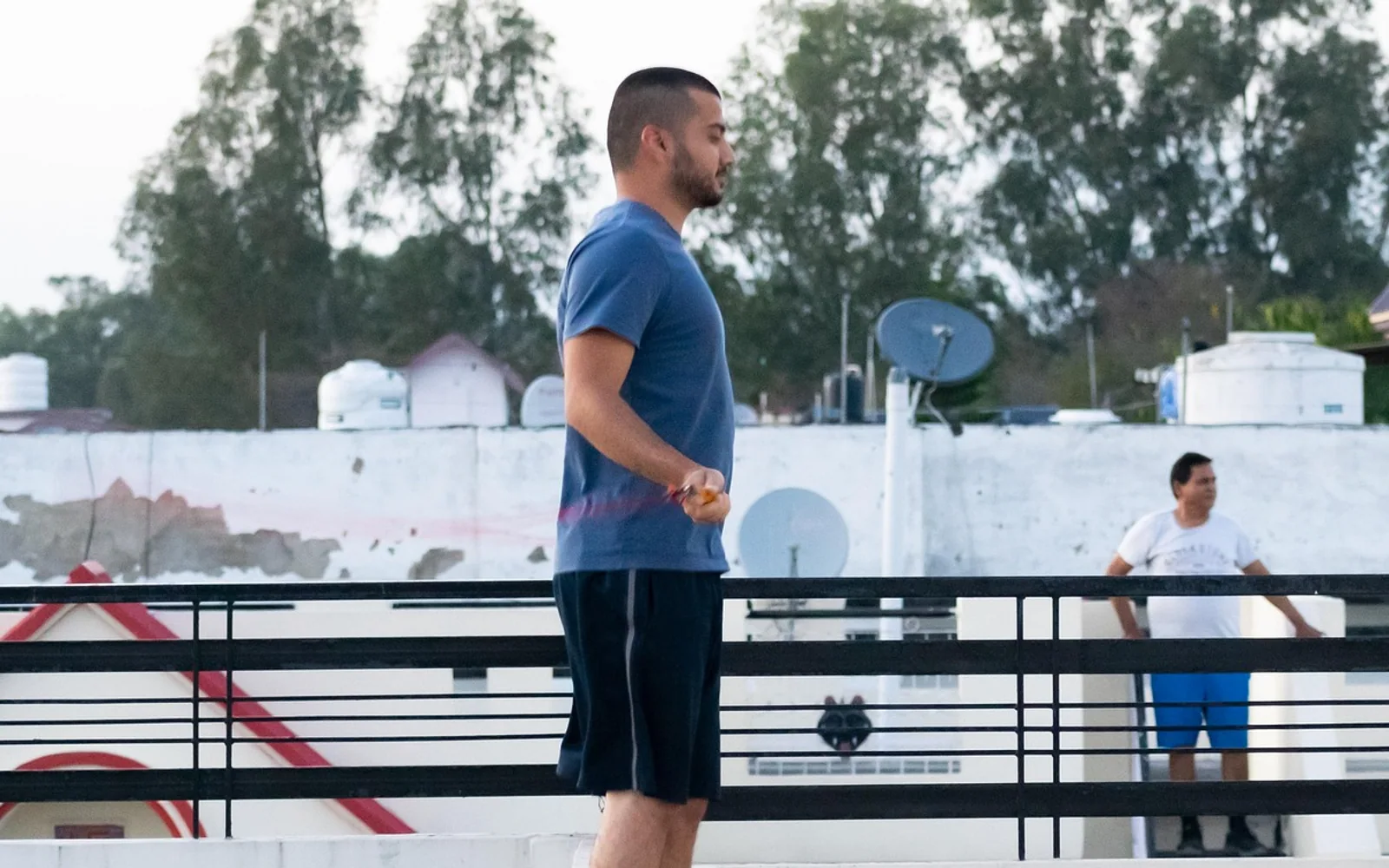
A beginner jump rope workout works best in short rounds: skip for twenty to thirty seconds, rest for about the same time, and repeat six to ten times. Keep the jumps low, land softly on the balls of your feet and turn the rope with your wrists rather than your whole arms. Two or three sessions a week, with the rounds getting a little longer each week, is enough to build rhythm and stamina without overloading your calves.
Get the rope and the space right first
Most early frustration with skipping comes from the setup, not from a lack of fitness. A rope that is too long slaps the floor late; one that is too short catches your toes. To check the length, stand on the middle of the rope with one foot and pull the handles up along your sides. For most beginners, the handles should reach somewhere around the armpits. Many ropes have adjustable cables, so trim or tie them until that fits.
Surface matters just as much. A wooden floor, a rubber gym mat or a smooth patch of outdoor ground is kinder to the joints than concrete or tiles. Check the ceiling height, move anything breakable and wear supportive trainers rather than going barefoot.
The basic bounce
Before adding speed or tricks, learn one plain movement and repeat it until it feels automatic.
- Hold the handles loosely at hip height, elbows close to your sides.
- Start with the rope behind your heels.
- Turn the rope with small circles of the wrists.
- Jump just high enough for the rope to pass, around two or three centimetres off the floor.
- Land on the balls of your feet with soft knees, then bounce straight into the next jump.
If the timing keeps slipping, practise without the rope for a minute: hold both handles in one hand, swing the rope at your side and jump each time it brushes the floor. It sounds silly, yet it teaches the rhythm quickly.
A four-week starter plan
Each session begins with three to five minutes of marching, gentle jogging on the spot and ankle circles. The rounds below are the main part. Rest by walking around rather than standing still.
| Week | Skip | Rest | Rounds |
|---|---|---|---|
| 1 | 20 seconds | 40 seconds | 6 |
| 2 | 30 seconds | 30 seconds | 8 |
| 3 | 40 seconds | 30 seconds | 8 |
| 4 | 60 seconds | 30 seconds | 8–10 |
Tripping during a round is normal. Simply restart and count the time, not the clean jumps. If a week feels hard, repeat it before moving on; there is no prize for rushing.
Variations once the basic bounce feels easy
- Alternate-foot step: a light jogging motion over the rope, which many people find easier to keep up for longer.
- Side-to-side: small hops a few centimetres left and right.
- Boxer skip: shift your weight from one foot to the other while the other foot taps lightly.
- Slow-fast rounds: ten easy turns, then ten quicker ones, repeated for the whole round.
Add one variation at a time and keep plain bounces in every session as the steady base.
Where skipping fits in your week
Because it is quick and portable, a rope session slots in where a run or a gym visit would not. It works as a short cardio finisher after a strength session or as a stand-alone workout on a busy evening. On days when your legs already feel heavy from other training, choose a walk instead. Skipping repeats the same landing hundreds of times, so tired calves and ankles are worth respecting; our article on why muscles tire and how they recover explains what that heaviness usually means.
If jumping is not right for you at the moment, steady indoor cardio is still possible with lower impact, and the five sessions in our beginner treadmill workouts follow a similar build-up of effort.
Looking after calves, ankles and shins
New skippers often feel it most in the lower legs the next day. A few habits keep that manageable:
- keep sessions short in the first fortnight, even when you feel you could do more
- leave at least a day between rope sessions at first
- finish with slow calf and ankle stretches
- on the day after, choose easy movement such as the ideas in our rest day exercises
Mild stiffness that fades within a couple of days is common. Sharp pain in the shin, heel or ankle, pain that gets worse during a session or swelling is a reason to stop and ask a doctor or physiotherapist. The same goes for anyone with a heart condition, joint problems, pelvic floor concerns or who has been inactive for a long time: check with a professional before adding a high-impact activity.
Small things that make it stick
Keep the rope somewhere visible, such as by the front door or next to your trainers. Count rounds aloud, play a song with a steady beat, or set a simple interval timer on your phone so you do not have to watch the clock. A rope session done three times a week beats an ambitious plan that lasts a fortnight.