Calisthenics is strength training that uses your own body weight instead of machines or heavy weights. A good beginner calisthenics workout covers the main movement patterns—squatting, lunging, pushing, pulling, hinging and bracing—with simple versions of each exercise, done two or three times a week. You progress by moving to a harder variation, not just by piling on reps. The plan below needs a floor, a sturdy chair and about thirty minutes.
Why calisthenics suits beginners
- No equipment or membership: a living room, garden or park is enough.
- Easy to scale: every exercise has gentler and tougher versions.
- Useful strength: the moves mirror everyday tasks like getting up from the floor or lifting a bag into the boot.
- Short sessions: no travel time and no waiting for equipment.
The six beginner moves
| Pattern | Beginner exercise | Main muscles |
|---|---|---|
| Squat | Bodyweight squat or sit-to-stand | Thighs, glutes |
| Push | Incline push-up | Chest, shoulders, triceps |
| Pull | Towel row or prone Y-raise | Upper back, rear shoulders |
| Hinge | Glute bridge | Glutes, hamstrings |
| Lunge | Reverse lunge, holding a chair | Thighs, glutes, balance |
| Brace | Forearm plank | Core |
How to do each one
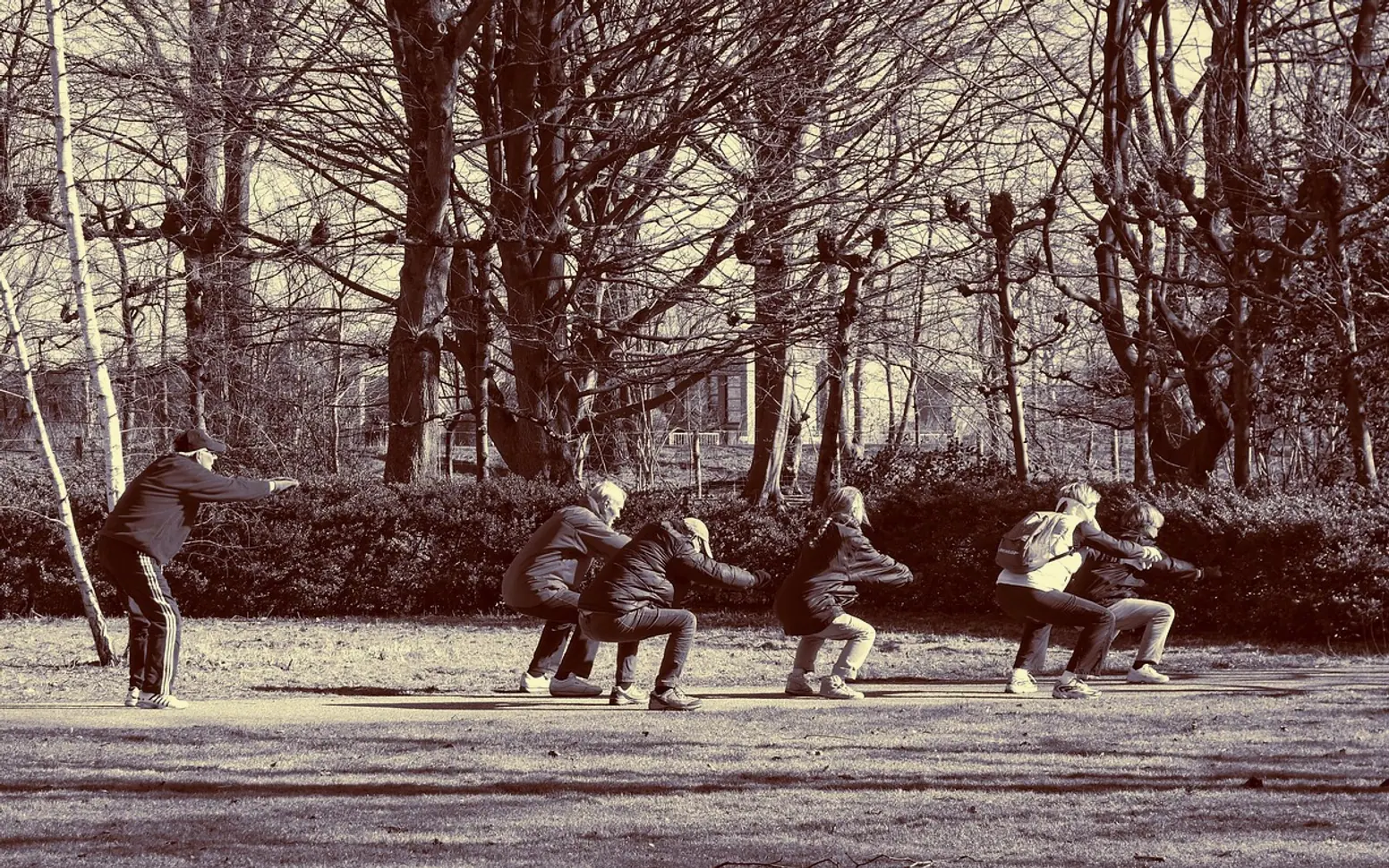
- Squat: feet about shoulder width apart, sit the hips back and down, then stand tall. Our guide to bodyweight squats covers form in detail.
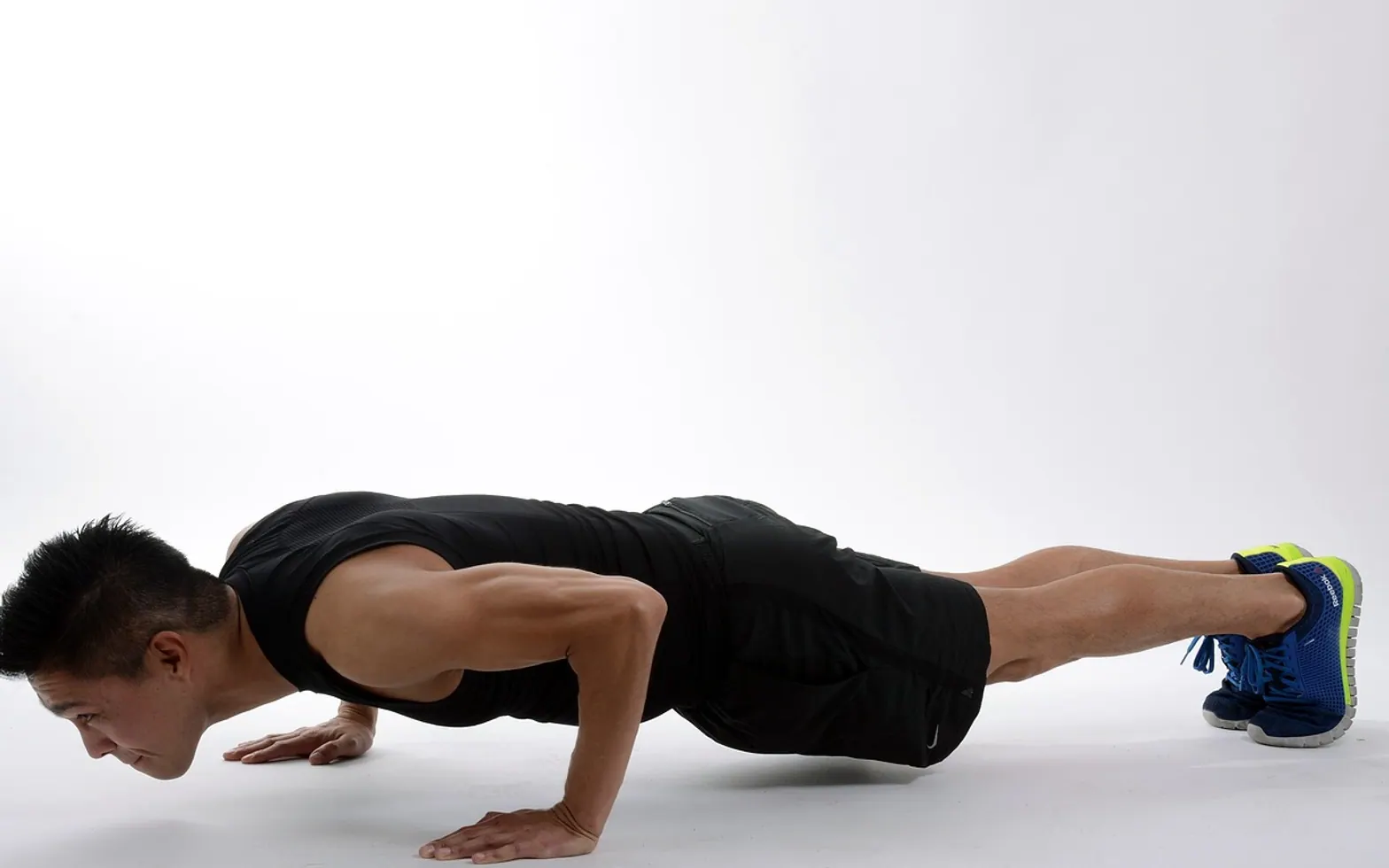
- Incline push-up: hands on a sturdy table edge, worktop or step, body straight, lower your chest and press back. See what muscles push-ups work for the full progression.
- Towel row: loop a towel around a solid post or banister, hold both ends, lean back slightly with straight arms, then pull your chest towards your hands. Check the anchor point is secure. If you have nowhere safe, do a prone Y-raise instead: lie face down, arms overhead in a Y shape, and lift them slightly off the floor.
- Glute bridge: lie on your back, knees bent, feet flat; lift your hips until your body forms a line from shoulders to knees, pause, then lower.
- Reverse lunge: holding a chair back lightly, step one foot back and lower the back knee towards the floor, then return. Alternate legs.
- Forearm plank: elbows under shoulders, body straight, stomach tight. Use your knees if needed.
The four-week plan
Train three days a week with at least one day off between sessions, for example Monday, Wednesday and Friday. Warm up first with five minutes of marching on the spot, arm circles and gentle leg swings.
- Week 1: two rounds; 8 reps of each exercise (8 per leg for lunges), 20-second plank. Rest one minute between rounds.
- Week 2: two rounds; 10 reps, 25-second plank.
- Week 3: three rounds; 10 reps, 30-second plank.
- Week 4: three rounds; 12 reps, 30–40-second plank.
Finish with a few minutes of stretching. Our beginner stretching routine is a good fit.
Fitting it into a busy week
If thirty minutes feels like too much on a work night, split the session: do the squats, push-ups and rows in the morning and the bridges, lunges and plank in the evening. Laying out a mat and a chair the night before removes one small excuse. On days when even that will not happen, a single round of all six moves still keeps the habit alive and takes under ten minutes.
How to progress after four weeks
Once three rounds of twelve feel comfortable, make each exercise a little harder rather than doing more and more reps:
- Squat: slow the lowering phase or try split squats.
- Push-up: lower the incline, then move to knee push-ups and full push-ups.
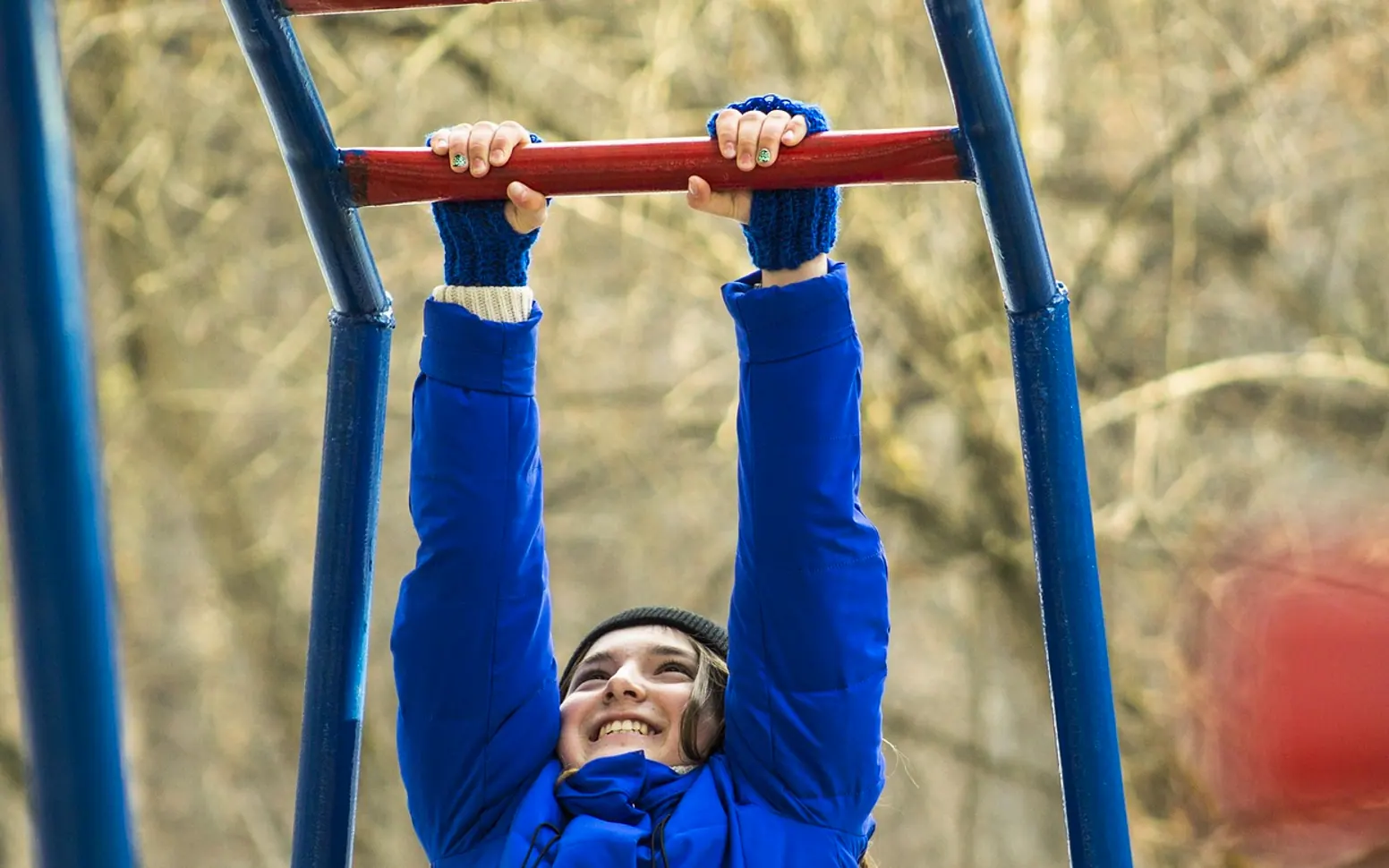
- Row: walk your feet further forward for a steeper lean, or try rows under a low, fixed bar in a park.
- Bridge: try single-leg bridges.
- Lunge: let go of the chair, then add a pause at the bottom.
- Plank: lift one foot for a few seconds at a time, or add side planks.
Later goals many people enjoy include full push-ups, pull-ups on a bar and pistol squat progressions. Take each one a step at a time.
Mistakes to avoid
- Jumping straight to advanced moves seen online.
- Training hard every day without rest; muscles need time to adapt, as explained in our guide to rest days done right.
- Skipping pulling exercises, which leaves the upper back undertrained.
- Letting form slip to finish a set.
- Changing the plan every few days before it has had time to work.
Quick answers
Can you build muscle with calisthenics?
Yes, especially as a beginner. Progressing to harder variations keeps challenging the muscles in a similar way to adding weight.
How long should a beginner calisthenics workout take?
Around twenty-five to thirty-five minutes, including a warm-up and cool-down.
Is calisthenics safe if I have joint problems?
Many people with stiff or sore joints do well with bodyweight training, but check with a doctor or physiotherapist first if you have a diagnosed condition, recent injury or ongoing pain.