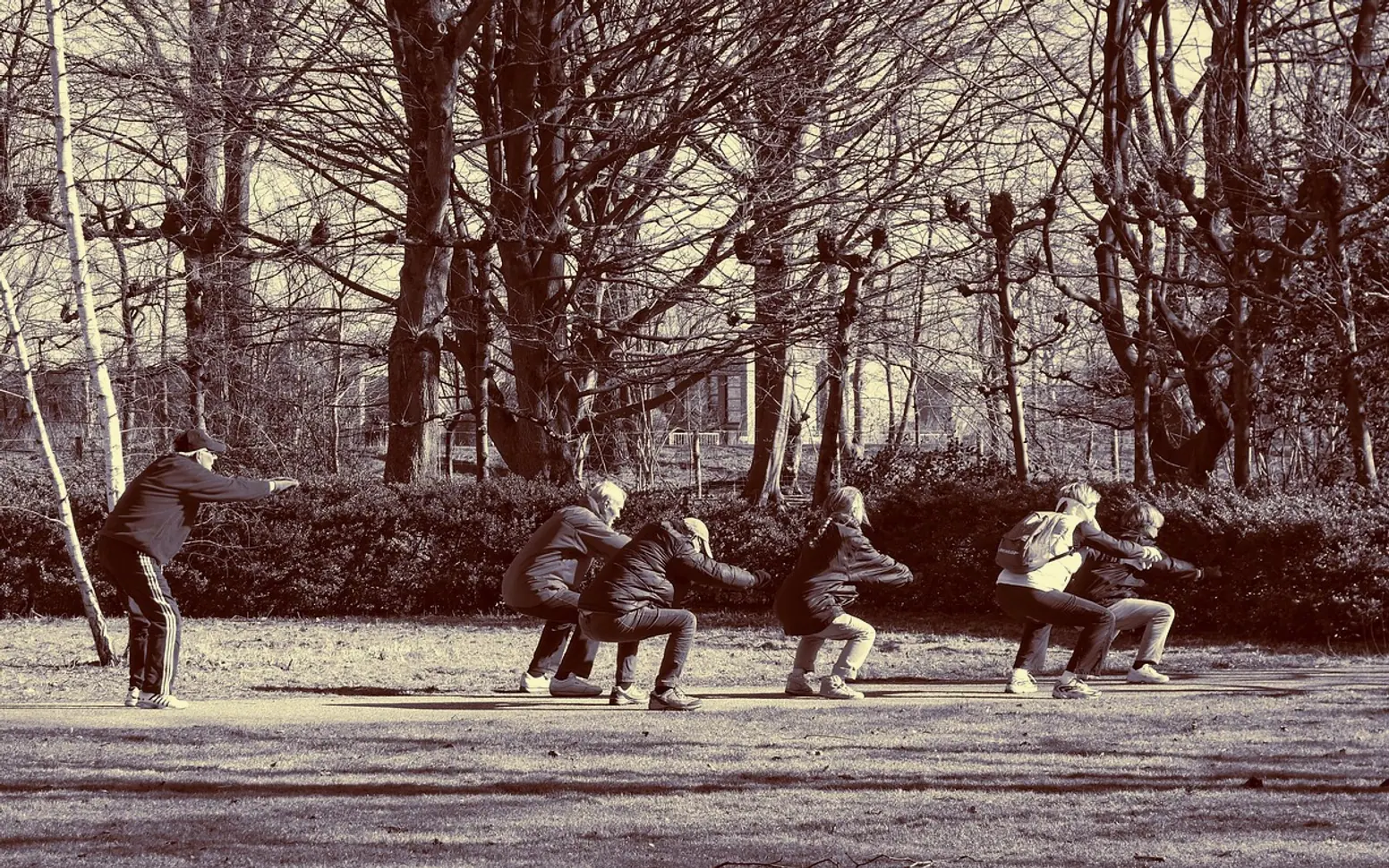
A bodyweight squat is a simple lower-body exercise: stand with your feet about hip to shoulder width apart, push your hips back and bend your knees as if sitting into a chair, then stand back up by driving through your whole foot. It works the thighs, glutes and core, needs no equipment and can be made easier or harder in small steps. Two or three sets of eight to twelve controlled reps is a good starting point for most beginners.
What muscles do bodyweight squats work?
- Quadriceps: the front of the thighs, which straighten the knees as you stand.
- Glutes: the muscles of the buttocks, which extend the hips.
- Hamstrings and inner thighs: they help control the descent and steady the knees.
- Calves: for balance and ankle control.
- Core: the trunk muscles keep your back steady throughout.
Because the squat mirrors getting up from a sofa, a car seat or the floor, strength gained here shows up in everyday life quickly.
How to do a bodyweight squat, step by step
- Set your stance. Feet roughly hip to shoulder width apart, toes turned out slightly. Find what feels natural for your hips.
- Brace gently. Stand tall, ribs down, and tighten your stomach as if about to cough.
- Start the movement. Send your hips back and bend your knees at the same time. Let your arms reach forward for balance.
- Keep the knees tracking. They should travel in line with your toes rather than collapsing inwards.
- Go as low as is comfortable. Aim for thighs roughly parallel to the floor over time, but only as far as you can keep your heels down and your back steady.
- Stand up. Push the floor away through the whole foot and squeeze your glutes at the top.
Breathe in on the way down and out as you rise. Move at a controlled pace, around two to three seconds down and one to two seconds up.
Common squat mistakes and quick fixes
| Mistake | What it looks like | Try this |
|---|---|---|
| Knees caving in | Knees move towards each other on the way up | Think about “spreading the floor” with your feet |
| Heels lifting | Weight shifts onto the toes | Sit back more; reduce depth; widen stance slightly |
| Rounded back | Shoulders slump forward at the bottom | Keep chest proud; squat to a higher target |
| Rushing | Dropping quickly and bouncing up | Slow the lowering phase and pause briefly |
| Holding the breath | Face reddens, tension builds | Steady breathing through each rep |
Easier versions
- Sit-to-stand: squat down to a sturdy chair, touch it lightly, then stand. Raise the seat with a cushion if needed.
- Supported squat: hold a kitchen worktop or a door frame for balance.
- Half squat: bend only partway, building depth over the weeks.
- Wall squat: slide your back down a wall a short distance and hold briefly.
Harder versions
- Pause squat: hold for two seconds at the bottom of each rep.
- Tempo squat: take four slow seconds to lower down.
- Split squat: one foot forward, one back, lowering the back knee towards the floor.
- Squat with a backpack: add a little weight using books in a bag held at your chest.
- Squat jump: only once regular squats feel very easy and your knees are happy with impact.
How many squats should a beginner do?
Start with two sets of eight to ten good reps, resting about a minute between sets, two or three times a week. When you can do three sets of twelve with solid form, choose a harder version rather than simply adding more reps. Squats fit neatly into a full-body session such as our twenty-minute home workout or a beginner calisthenics plan.
Warming up and cooling down
A few minutes of marching, leg swings and slow hip circles before you start prepares the joints. Afterwards, gentle thigh, calf and hip stretches help you feel looser. Our ten-minute stretching routine covers all of them.
Is squatting bad for your knees?
For most people, well-controlled squats are a helpful way to strengthen the muscles that support the knees. Discomfort often comes from going deeper than you are ready for, letting the knees collapse inwards, or doing too many reps too soon. If you have an existing knee or hip problem, or a squat causes sharp pain, stop and ask a physiotherapist or doctor which version suits you.
Quick answers
Should my knees go past my toes?
A little forward knee travel is natural and depends on your body shape. Focus on keeping the heels down and the knees in line with your toes rather than on a strict rule.
Can I squat every day?
A few gentle squats as a daily movement habit is fine. For harder sessions, leave at least a day between them so your legs can recover.