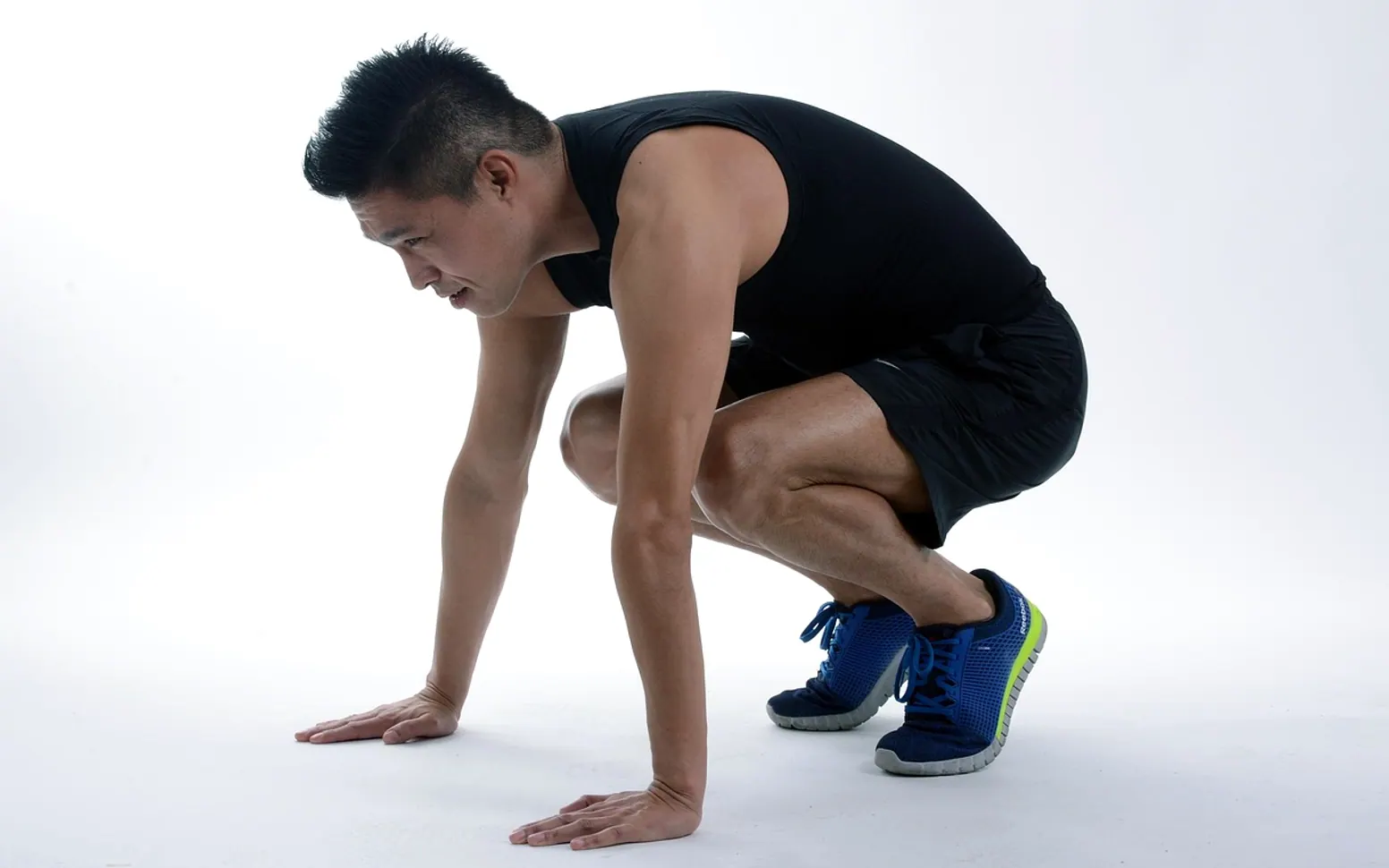
The hardest part of training on a weeknight is rarely the exercise itself. It is the gap between getting home and getting started — the moment when the sofa looks far more convincing than any plan. A short routine that needs no equipment and no travel removes most of that friction. You can be finished before you have properly talked yourself out of it.
If you are new to exercise, returning after an injury or living with a health condition, check with your doctor before starting something new.
How the session is built
The routine has three parts: a few minutes to warm up, a main block of simple movements repeated in rounds, and a short cool-down. Everything uses your own body weight, so all you need is enough floor space to lie down and a chair or sofa that will not slide.
Warm-up (about four minutes)
- march on the spot, lifting the knees a little higher as you go
- slow arm circles, forwards and then backwards
- gentle squats to a comfortable depth, without rushing
- side steps with a small reach of the arms overhead
The aim is simply to feel warmer and a little looser than when you started. There is no prize for going hard here.
Main block (about twelve minutes)
Work through these five movements in order, spending around forty seconds on each and resting for twenty. Repeat the circuit three times.
- Squats — sit back as if towards a chair, then stand tall again.
- Incline push-ups — hands on the edge of the sofa or a sturdy table; the higher the surface, the easier it gets.
- Reverse lunges — step back, lower with control, return, then switch legs.
- Glute bridges — lie on your back with knees bent and lift your hips until your body forms a straight line from shoulders to knees.
- Dead bugs — on your back, slowly lower an opposite arm and leg towards the floor while keeping your lower back steady.
Cool-down (about four minutes)
Walk around the room until your breathing settles, then spend a minute or two on easy stretches for the hips, thighs and chest. Finish with a few slow breaths, standing or lying down, before you move on to the rest of your evening.
Making it fit you
A good routine bends to the day you have had. On a tired evening, do two rounds instead of three, or swap lunges for step-ups onto the bottom stair. When it starts to feel easy, lower the surface for push-ups, slow every movement down, or add a fourth round. Small adjustments like these keep the session useful for months rather than weeks.
Keeping it going
Consistency comes from making the decision once rather than every evening. Pick two or three fixed weeknights, leave a mat or towel somewhere visible, and treat the session like any other appointment. Some nights it will feel great and some nights it will feel like a chore. Both count. Over a few weeks, the routine stops being something you have to argue yourself into and becomes part of how the week runs.