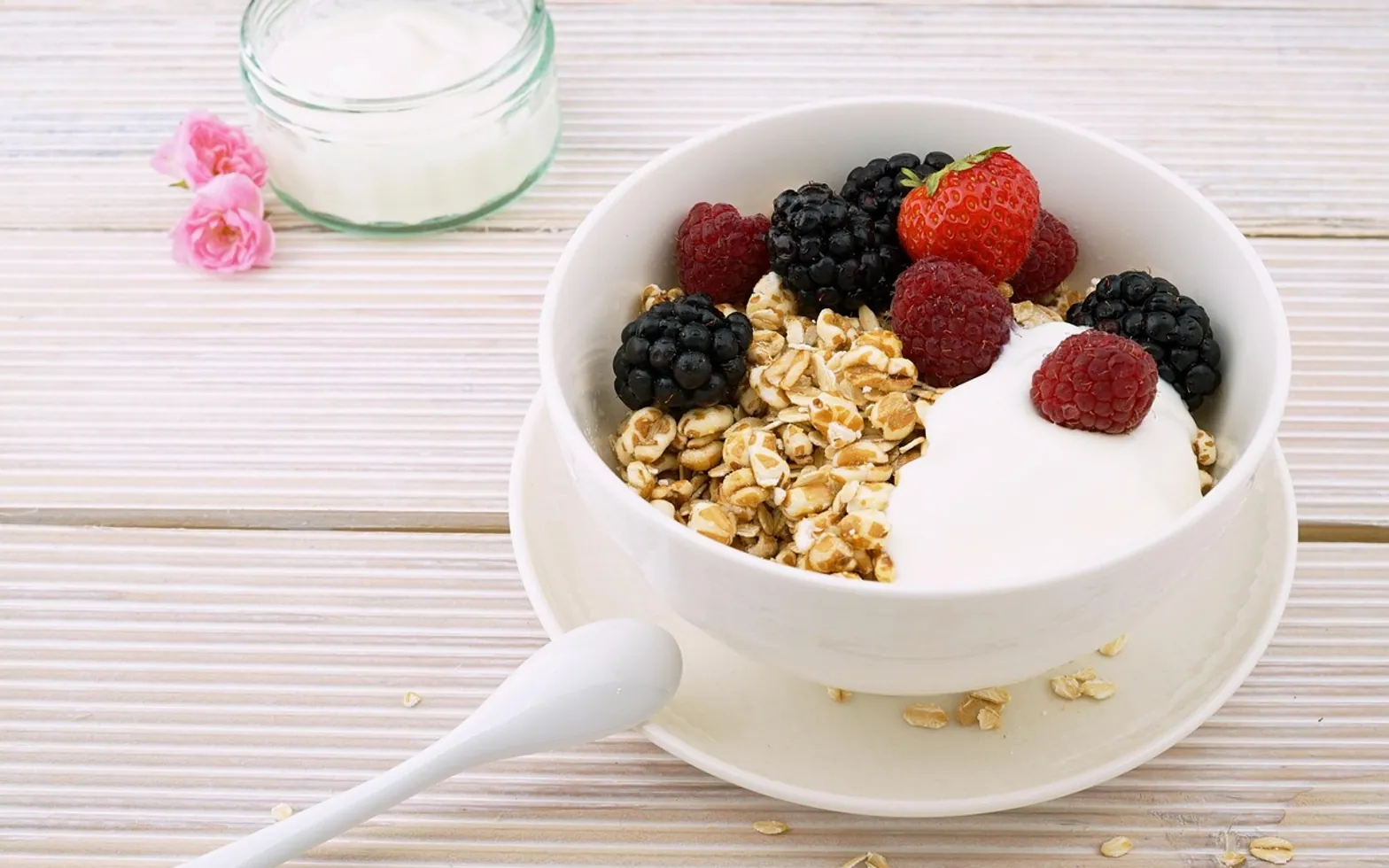
Breakfast advice tends to swing between two extremes: skip it entirely, or prepare something that belongs on a café menu. Most of us need neither. What helps on a busy morning is a meal that is quick, that you genuinely like, and that keeps hunger at bay long enough for you to get through the first half of the day. Building it around a good source of protein is one of the simplest ways to get there.
If you have a medical condition, food allergies or specific dietary needs, a doctor or registered dietitian can help you adapt these ideas.
Why protein in the morning helps
Many people notice that a breakfast of only toast, cereal or pastries leaves them hungry again fairly soon. Adding protein — and some fibre alongside it — tends to make a meal more satisfying. For anyone who trains, it is also a convenient way to spread protein through the day rather than leaving most of it for the evening meal.
A simple formula
Rather than following a strict recipe, think of breakfast in three parts:
- a protein base — eggs, Greek-style yoghurt, cottage cheese, tofu, beans or a glass of milk or fortified soya drink
- something with fibre — oats, wholegrain bread, fruit, berries, seeds or vegetables
- a little extra flavour — a few nuts, a spoonful of nut butter, herbs, spices or a drizzle of honey
Pick one from each and you have a breakfast. Changing the combination keeps things interesting without needing new recipes.
Five combinations to try
- Yoghurt with oats, berries and a handful of chopped nuts.
- Scrambled eggs on wholegrain toast with tomatoes or spinach.
- Overnight oats made with milk, a spoonful of yoghurt and grated apple, prepared the evening before.
- Cottage cheese on rye bread with sliced cucumber and black pepper.
- Beans on toast with a sprinkle of cheese for a savoury, filling option.
Making mornings easier
The best breakfast is the one that happens. A little preparation helps: boil a few eggs at the weekend, portion oats into jars, or keep a bag of frozen berries in the freezer. If you are rarely hungry first thing, there is no rule saying breakfast must be eaten at seven — taking it to work and eating mid-morning is perfectly fine.
Listen to how you feel
Notice how different breakfasts affect your energy, concentration and appetite through the morning. After a couple of weeks you will usually find two or three combinations that suit you. Keep those on rotation, and breakfast stops being a daily decision and becomes one less thing to think about.