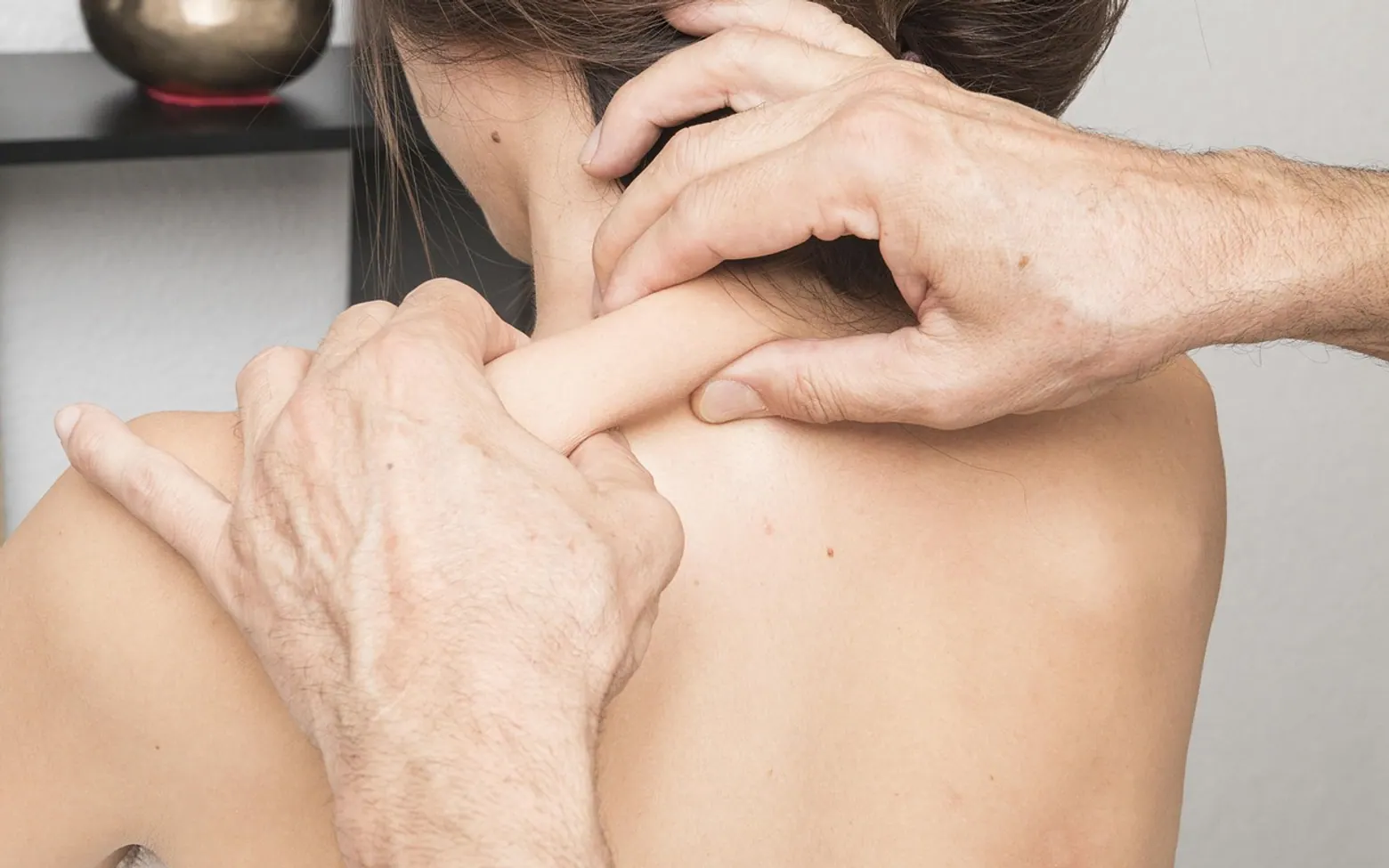
A muscle knot is a small, tight and tender spot inside a muscle that feels sore when you press on it and sometimes sends an ache to a nearby area. Most knots are harmless and ease with a mix of gentle pressure, warmth, regular movement and fewer hours spent in one position. They are common in the upper back, neck and shoulders, and they tend to return when the habits behind them stay the same.
What is a muscle knot, exactly?
The everyday word “knot” is a bit misleading. Nothing inside the muscle is literally tied up. What you feel is a patch of muscle fibres that seems to stay partly contracted and irritated, often described in clinical settings as a myofascial trigger point. Under your fingers it can feel like a pea, a ridge or a band that is firmer than the tissue around it.
Researchers still debate exactly what is happening at the level of the muscle fibre, and not every tender spot behaves the same way. For practical purposes, though, the experience is familiar to most people: a sore spot that makes a movement feel stiff and that you keep wanting to rub.
Common places to find them
- Upper back and shoulders: along the top of the shoulders and between the shoulder blades, especially after long days at a desk or behind the wheel.
- Neck: along the sides and at the base of the skull, sometimes linked with tension-type headaches.
- Lower back: in the muscles either side of the spine.
- Calves and the outside of the hips: often after a jump in walking, running or stair work.
What tends to cause them
Knots seldom trace back to one thing. They usually build up from a combination of factors, and spotting your own pattern is the most useful step towards fewer of them.
- Staying still for too long: holding the same seated or standing position for hours keeps some muscles working quietly without a break.
- Repetitive tasks: carrying a bag on one shoulder, using a mouse all day or lifting a toddler on the same hip.
- Sudden increases in exercise: a new class, a long hike or a big gardening weekend after weeks of little activity.
- Stress and poor sleep: many people notice that they hold tension in the shoulders and jaw when life is busy.
How to ease a muscle knot at home
Most people find relief by combining a few gentle approaches rather than relying on one. Keep everything at a level that feels like a “good ache” and never push into sharp pain.
1. Self-massage with steady pressure
Massaging muscle knots is the approach most people reach for first, and it often helps. Use your fingertips or a tennis ball against a wall:
- Place the ball between your back and the wall, just beside the sore spot rather than on the spine.
- Lean in until you feel firm but tolerable pressure.
- Hold still for twenty to thirty slow breaths, or roll in small circles.
- Move on once the tenderness starts to fade, and stop if it becomes sharper.
A foam roller works in a similar way for larger areas such as the calves and thighs. Slow, light passes usually do more good than hard grinding.
2. Warmth
A warm shower, a heat pack wrapped in a towel or a hot water bottle can help a tight area relax before you stretch or massage it. Keep heat comfortable rather than hot, limit each session to around fifteen to twenty minutes and avoid using it on skin that is numb or broken.
3. Gentle stretching and mobility
Slow shoulder rolls, chin tucks, side bends and upper-back openers keep tight areas moving. Our ten-minute beginner stretching routine covers the neck, shoulders and hips in one short session and works well after a ball massage.
4. Movement breaks through the day
Because stillness is such a common trigger, small breaks often matter more than any single treatment. Stand up, walk to fill a glass of water, and roll the shoulders every half hour or so. Light activity on easier days, such as the ideas in our guide to rest day exercises, keeps blood flowing to stiff muscles without adding strain.
Mistakes that keep knots coming back
- Pressing so hard that you tense up against the pain.
- Working on the same spot for many minutes at a time, every day.
- Relying only on massage while the desk, bag or sleeping position stays unchanged.
- Skipping a warm-up before new or harder exercise.
When a check-up is a good idea
Ordinary knots are a nuisance rather than a danger, but some symptoms deserve attention from a doctor or physiotherapist. Arrange a visit if any of these apply:
- numbness, tingling or weakness in an arm or leg
- pain that started after a fall, accident or clear injury
- swelling, redness or heat over the sore area
- pain that wakes you at night or keeps getting worse
- no improvement after a couple of weeks of gentle self-care
A professional can check what is really going on and suggest hands-on treatment or exercises suited to you.
Quick answers
Can a knot “pop” or be broken up?
Not in the way the phrase suggests. Pressure and warmth seem to help the area relax and feel less sensitive, which is why the tight feeling often softens. Aggressive digging is not needed and can leave you more sore.
Should I exercise with a knot?
Usually, yes, as long as movement does not cause sharp pain. Gentle, varied activity tends to help. If a particular exercise flares the spot, ease off that one for a few days and choose something lighter.
How long do muscle knots last?
It varies. Some fade within days once you change the habit behind them; others linger or return for weeks. If one keeps coming back in the same place, it is worth looking at posture, workload and sleep, and talking to a professional.